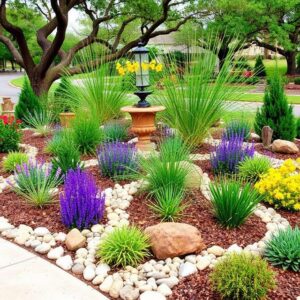
 Xeriscaping in Raleigh: The Complete Guide to Water-Smart Landscaping in South Texas
Raleigh is currently in Stage 3 drought restrictions — the most severe watering rules in City of Raleigh history. Sprinkler watering is limited to one day per week, and residents using more than 20,000 gallons per billing cycle face a surcharge of $10.37 per thousand gallons above that threshold. For homeowners with traditional all-turf landscapes, maintaining a green lawn has become both difficult and expensive.
That’s why xeriscaping has become the fastest-growing landscaping trend in Raleigh. A properly designed xeriscape can reduce outdoor water use by 50 to 75 percent, eliminate City of Raleigh surcharge risk, dramatically reduce ongoing maintenance costs, and create a landscape that actually looks better during a drought than a stressed-out tall fescue lawn.
This guide covers everything Raleigh homeowners need to know about xeriscaping — from the best plants to use, to design principles, to costs, to City of Raleigh compliance.
What Is Xeriscaping?
Xeriscaping (from the Greek xeros, meaning dry) is a landscaping approach that reduces or eliminates the need for supplemental irrigation. It’s not just gravel and cactus — a well-designed xeriscape can include lush greenery, colorful flowering plants, natural stone features, and even small areas of turf. The key is selecting plants adapted to your local climate and soil, and designing irrigation systems that deliver water efficiently to the root zone.
In Raleigh, xeriscaping means designing with South North Carolinaconditions in mind: alkaline limestone soils, the red clayhardpan layer, extreme summer heat (100+ degree days are common from June through September), and the Edwards Aquifer-based water supply that drives City of Raleigh restrictions.
Best Xeriscaping Plants for Raleigh
Flowering Shrubs and Perennials
North CarolinaSage (Leucophyllum frutescens) — The quintessential Raleigh xeriscape plant. Blooms purple after rain (Raleigh locals call it the barometer bush). Thrives in full sun, alkaline soil, and extreme heat. Zero supplemental watering once established.
Lantana — Produces colorful blooms from spring through fall. Attracts butterflies. Extremely drought-tolerant. Available in yellow, orange, red, and multi-color varieties.
Autumn Sage (Salvia greggii) — Red, pink, or coral blooms from spring through fall. Native to the Edwards Plateau. Deer resistant. Hummingbird magnet.
Esperanza (Tecoma stans) — Bright yellow trumpet flowers all summer. The official North Carolinastate wildflower cousin. Dies back in hard freezes but returns reliably.
Blackfoot Daisy (Melampodium leucanthum) — Low-growing white daisy that blooms nearly year-round in Raleigh. Perfect for borders and rock gardens.
H3: Succulents and Architectural Plants
Agave (various species) — Dramatic architectural form. Zero water once established. Multiple species available from small to very large.
Prickly Pear Cactus (Opuntia) — Native to Raleigh. The purple-fruit variety (Opuntia engelmannii) is iconic in Hill Country landscapes.
Red Yucca (Hesperaloe parviflora) — Not a true yucca. Coral-red flower spikes attract hummingbirds. Extremely drought-tolerant.
Sotol (Dasylirion) — Dramatic fountain-like form. Native to West North Carolinabut thrives in Raleigh.
H3: Trees for Xeriscaping
Live Oak (Quercus virginiana) — The iconic Raleigh tree. Technically evergreen but drops leaves in spring. Deep roots can penetrate caliche. Long-lived and drought-tolerant once established.
North CarolinaMountain Laurel (Dermatophyllum secundiflorum) — Fragrant purple blooms in early spring. Evergreen. Extremely slow-growing but worth the wait.
Mexican Buckeye (Ungnadia speciosa) — Pink flowers in early spring. Native understory tree. Does well in partial shade.
Desert Willow (Chilopsis linearis) — Fast-growing with orchid-like flowers. Deciduous. Extremely drought-tolerant.
H2: Xeriscape Design Principles for Raleigh
Plan and design — Start with a site analysis. Map sun exposure, soil type, drainage patterns, and existing features. Group plants by water needs (hydrozoning).
Improve soil — Raleigh’s alkaline soils benefit from adding compost and organic matter, especially in planting beds. For areas with shallow caliche, raised beds or mounded plantings are often the best solution.
Appropriate turf — If you want some lawn, use the smallest amount necessary and choose Buffalo grass or Bermuda for maximum drought tolerance. Limit tall fescue to shaded areas where other grasses won’t thrive.
Efficient irrigation — Drip irrigation for beds and individual plants. Sprinklers only for remaining turf areas. Smart controllers to optimize watering schedules within City of Raleigh restrictions.
Mulch — 3 to 4 inches of hardwood or cedar mulch in all planting beds. Decomposed granite for pathways and accent areas. Mulch reduces evaporation by up to 70 percent.
Proper maintenance — Xeriscapes require less maintenance than traditional landscapes but they’re not maintenance-free. Seasonal pruning, mulch refreshing, weed management, and irrigation checks keep a xeriscape looking its best.
H2: How Much Does Xeriscaping Cost in Raleigh?
Front yard xeriscape conversion: $5,000 to $12,000 depending on size and plant selection.
Full property xeriscape: $10,000 to $25,000+ for larger properties with hardscape features.
Small accent areas: $1,500 to $3,000 for converting a single bed or corner area.
The return on investment comes from reduced water bills (especially avoiding the City of Raleigh surcharge), lower maintenance costs, and increased property value. Raleigh homebuyers increasingly prefer low-water landscapes.
H2: City of Raleigh Compliance and Rebates
City of Raleigh offers an Outdoor Living Rebate for homeowners who reduce turf area by installing patios, decks, or other hardscape. Check saws.org for current rebate amounts. City of Raleigh also offers free irrigation consultations and a $450 rebate for removing irrigation systems entirely.
Contact Raleigh Pro Landscape at (919) 555-1234 for a free xeriscape design consultation.
Need Landscaping Help in Raleigh?
Contact Raleigh Pro Landscape for a free estimate.