
Quick answer: Durham, the Triangle’s Bull City, pairs historic tree-canopy neighborhoods around Duke with new growth toward Research Triangle Park. We renovate and maintain landscapes across Durham County’s 277xx zips, from Trinity Park and Forest Hills to Hope Valley and Southpoint, handling deep shade, mature trees, clay drainage, and tall-fescue lawns. Free written estimates: (919) 823-6150.
Landscaping the Bull City
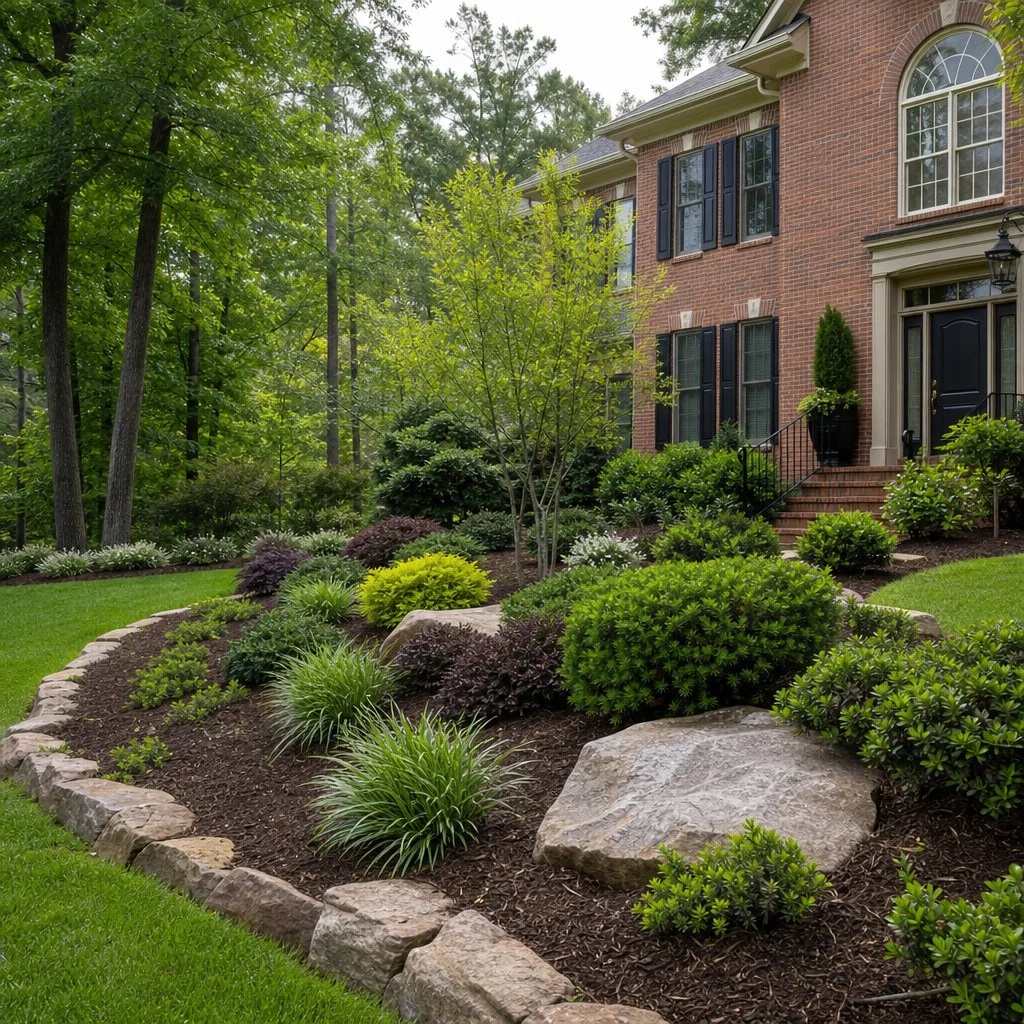
Durham is the Triangle’s second city and its most distinct: a former tobacco town reinvented around Duke University, Research Triangle Park, and a dense, walkable core. Its neighborhoods range from the deep-canopy historic districts near downtown, Trinity Park, Old West Durham, Forest Hills, to the established estates of Hope Valley and the newer growth near Southpoint and RTP. That range, more than in any Triangle suburb, defines our Durham work.
What ties it together is mature trees and Piedmont clay: a lot of shade, a lot of leaf load, and slow-draining soil, all in the transition-zone climate.
Shade, Mature Trees, and Renovation
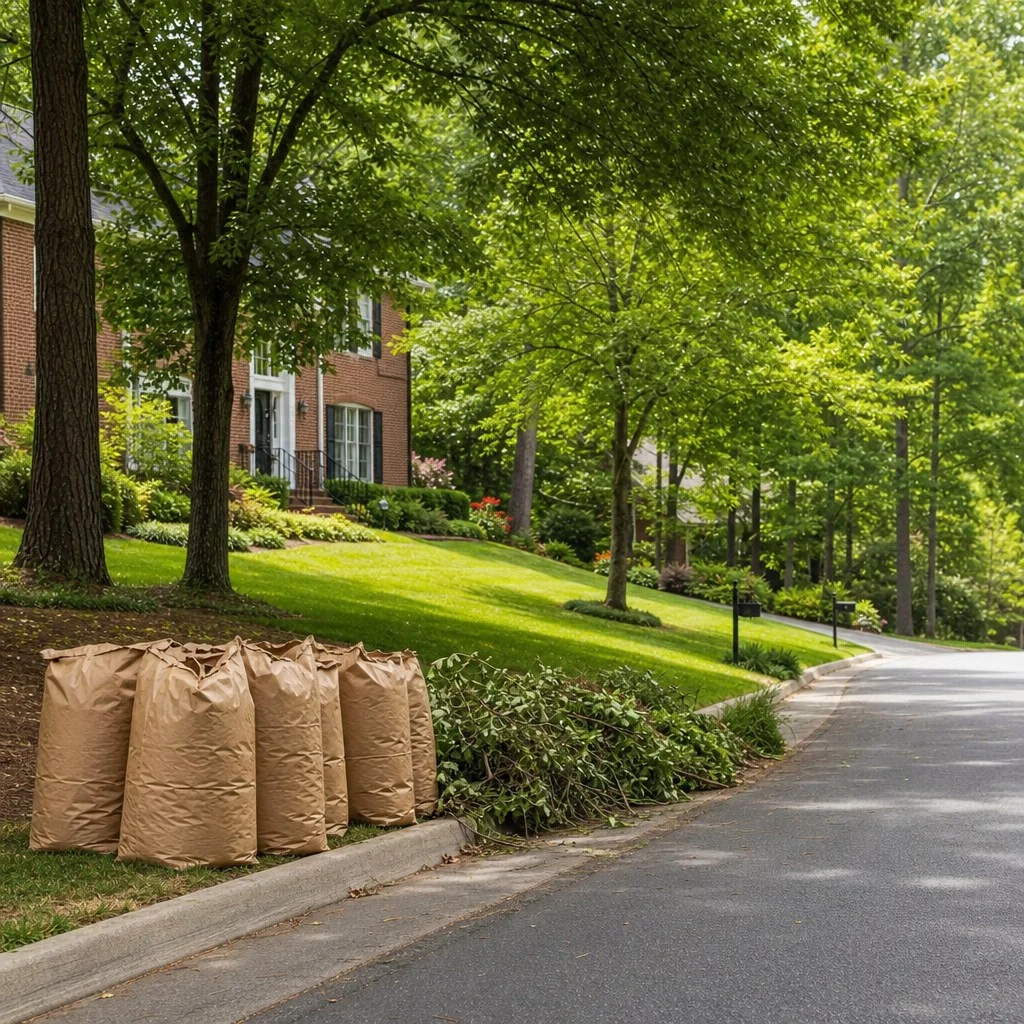
Durham’s older neighborhoods are heavily wooded, which is their charm and their challenge. Deep shade thins sun-loving turf, so we lean on shade-tolerant tall-fescue blends, selective limbing for light, and shade-garden beds where grass simply will not hold. Mature oaks and willow oaks drop a heavy leaf load, which we manage through the fall. On historic-district homes we renovate tired landscapes in keeping with the architecture rather than stripping them out.
Toward Southpoint and RTP the work shifts to establishing newer landscapes and corporate-adjacent properties.
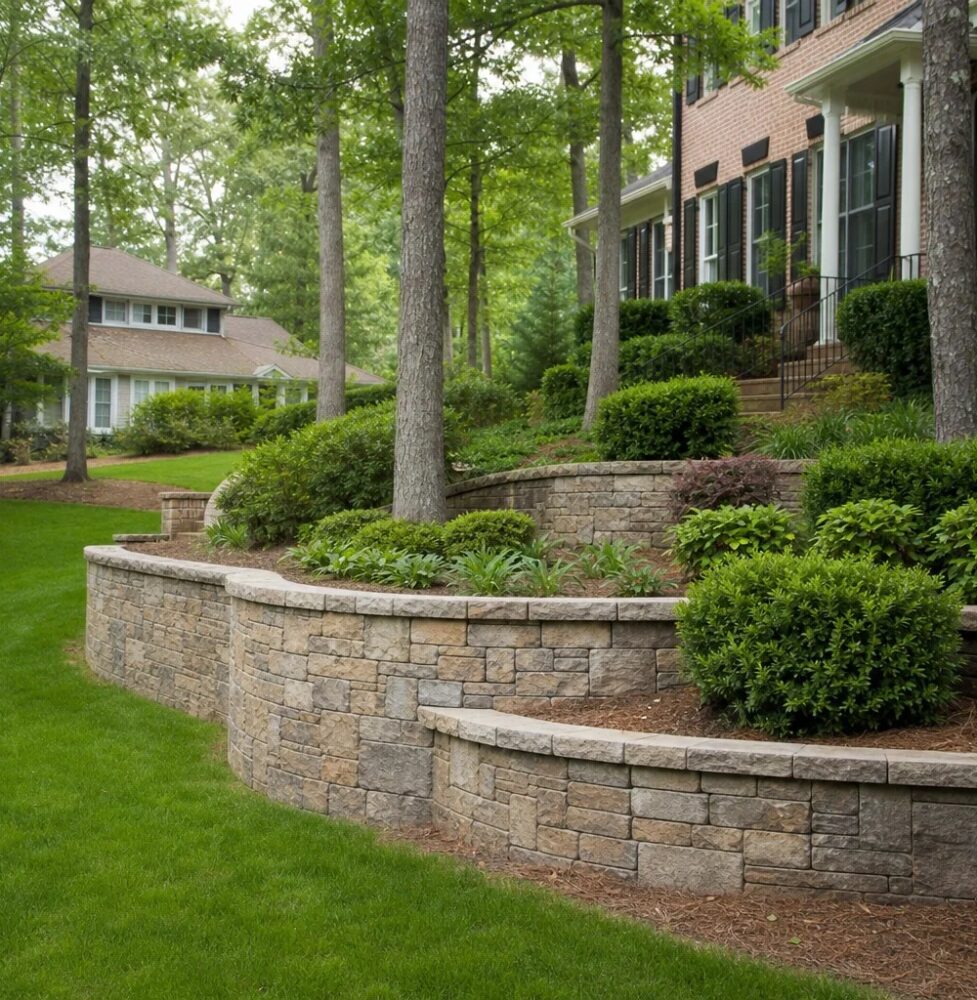
Durham’s Piedmont clay drains slowly, and older lots often have decades-old grading that channels water poorly. We correct drainage with regrading, French drains, and downspout work, then build patios, walkways, and stone walls, fitting natural stone to the older neighborhoods, on a base compacted for clay movement.
Durham Areas We Serve
We provide full landscaping throughout Durham and Durham County, including Trinity Park, Old West Durham, Forest Hills, Watts-Hillandale, Hope Valley, Woodcroft, and the newer communities near Southpoint, RTP, and the Wake County line.
Frequently Asked Questions
Can you handle the deep shade in Durham’s older neighborhoods?
Yes. Durham’s historic districts are heavily wooded. We use shade-tolerant tall-fescue blends, selective limbing to bring in light, and shade-garden beds where turf will not hold, so the landscape works with the canopy instead of fighting it.
Do you renovate landscapes in Durham’s historic districts?
Yes. In areas like Trinity Park and Forest Hills we renovate tired landscapes in keeping with the architecture, refreshing beds, plantings, and hardscape rather than stripping the character out.
How do you manage the heavy leaf load from mature trees?
Durham’s mature oaks and willow oaks drop a heavy fall leaf load. We provide scheduled leaf cleanup through the season to protect the lawn and keep beds and gutters clear.
What grass works best in Durham?
Tall fescue, often a shade-tolerant blend, is the standard for year-round green in Durham’s wooded, transition-zone setting, maintained with fall aeration and overseeding and a tall summer cut.
What does landscaping cost in Durham?
It depends on the neighborhood, lot, and whether it is renovation, maintenance, or hardscape. Everything is quoted per property with free written estimates. Call (919) 823-6150 to schedule.