Why should a Raleigh design begin with a soil check?
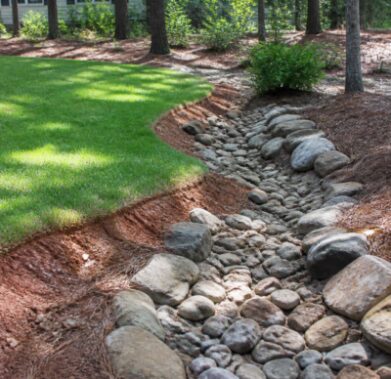
The NRCS Cecil-series description becomes strongly to very strongly acidic below the surface unless limed. A Raleigh plan should use a site soil test before specifying amendments, planting areas, or drainage work.
Raleigh Pro Landscape handles landscape design in Raleigh and across Wake County, from one tired foundation bed to a full front-and-back plan. A standalone design plan runs $300 to $2,500 depending on lot size and detail, and most installed projects land between $3,000 and $25,000. Call today and we’ll schedule your site walk.
Call (919) 823-6150 or request a free written quote. Tell us the address, what bugs you about the yard, and whether your HOA reviews exterior changes. We’ll come out and measure before anybody draws a line.
How much does landscape design cost in Raleigh?
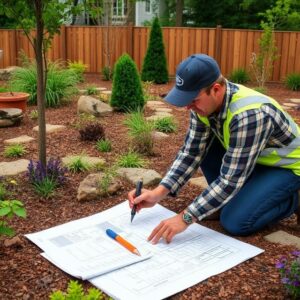
A standalone plan with scaled drawings, a plant list and a phasing plan runs $300 to $2,500, based on lot size and how much detail you want. If we build the project too, the design fee gets credited back against the work. Installed projects mostly run $3,000 to $25,000, and fully designed yards reach $30,000 and up.
Here’s what the pieces of a designed yard cost around here. These are the same 2026 ranges we publish in our Raleigh landscaping cost guide and on our cost page, so the numbers on this page match the rest of the site.
| Part of the plan | Typical Raleigh range |
|---|---|
| Design plan (drawings, plant list, phasing) | $300 to $2,500 |
| Flower bed install or refresh | $300 to $1,200 |
| Mulch, installed | $55 to $90 per cubic yard |
| French drain | $1,500 to $3,500 |
| Surface drains or regrading | $1,200 to $4,000 |
| Downspout extensions and dry creek bed | $800 to $3,000 |
| Gravel or decomposed granite path | $6 to $12 per sq ft |
| Concrete patio | $8 to $18 per sq ft |
| Paver patio | $15 to $30 per sq ft |
| Natural stone, brick or Carolina fieldstone | $20 to $40 per sq ft |
| Retaining wall | $30 to $60 per sq ft of wall face |
| Fire pit | $1,500 to $5,000 |
| New sprinkler system | $2,500 to $5,000 |
| Drip irrigation for beds | $1,500 to $4,000 |
| Sod, installed with soil prep | $1.50 to $3.00 per sq ft |
What moves the total:
- Slope. Rolling lots, common in North Raleigh, bring walls, steps and grading into the plan.
- Soil work. Compacted clay needs to be loosened and amended before beds go in. On a new-build lot that can be most of the bed budget.
- Hardscape. A patio or wall is where budgets climb the most.
- Water. Drainage fixes and irrigation are separate lines, and on clay at least one of them usually belongs in the plan.
- Phasing. Building in stages costs a bit more in total and a lot less per year.
What does our landscape design process look like, step by step?
It runs in seven steps: a site walk, a measured base plan, a site analysis, a concept you can mark up, a final plan with a plant list and phasing, an itemized estimate, then the install. We don’t choose a single plant until we’ve looked at your soil, sun, slope and where the water goes.
- Site walk. We measure, photograph, and ask how you actually use the yard: kids, dogs, grilling, a view you want or one you want gone. You decide the priorities and the rough budget. Usually an hour or so on site.
- Base plan. House, property lines, driveway, easements and setbacks go on a scaled drawing first. If you have the plot plan from closing, it saves a step.
- Site analysis. Sun and shade by corner, wet spots, downspouts, slope, views to keep and views to screen, and trees worth keeping. NC State Extension’s design guidance says to study a site across more than one season. On a first visit we ask you what it does in July and after a storm.
- Concept. Bed lines, lawn shape, patio and path locations, where the trees go. You mark it up. We fix it. Expect a round or two of changes, and that’s normal.
- Final plan. A scaled drawing, a plant list with sizes and counts, and notes on grading and drainage. You decide what’s phase one and what waits.
- Estimate. Every job gets a written estimate that shows each line item, so you can compare bids on equal footing or cut a line without redoing the plan.
- Install. Utilities get marked before any digging, which is free through 811. Drainage and hardscape go first, then soil prep, then trees, shrubs and perennials, then mulch. A bed renovation is a day or two. A full yard with a patio runs longer, in stages.
What do you get in a Raleigh landscape plan?
A scaled drawing of the yard as it will be built, a plant list with sizes and counts, grading and drainage notes, a phasing plan, and a line-item estimate. If your HOA has an architectural review, the plan is drawn so it can go straight into that submittal, and we prepare it.
- Scaled drawing. Beds, lawn, paths, patio, walls and trees, at their mature sizes, not their nursery-pot sizes.
- Plant list. Each plant with its mature height and spread, the sun it needs, and how many.
- Soil and drainage notes. Where compost goes in, where water gets redirected, and where it ends up.
- Phasing plan. NC State’s guidance is plain about this: there’s no need to develop an entire property at once, and building over several years can improve the result.
- Estimate. One line per item, priced from the ranges above.
Why does Raleigh red clay change how a yard gets designed?
Because Piedmont red clay is dense, acidic and slow to drain. Water ponds in low spots, roots sit wet, and plants that want loose soil sulk. So we grade first, send downspout water to a safe outlet, work compost into the beds, and pick plants that tolerate clay instead of fighting it.
Raleigh clay often tests around pH 5.0 to 6.0, while tall fescue wants 6.0 to 6.5. That’s why lime shows up on so many of our plans, and why we set the rate from a soil test through NC State Extension, not a guess. One more thing: don’t add sand to clay. Compost is the right amendment.
New subdivisions have their own version of the problem. NC State notes that during home construction the top layer of soil is often removed, leaving compacted subsoil mixed with construction debris. That’s what a builder-grade yard is planted in. On those lots we test in more than one spot, since soil can change over a short distance, and we budget real soil prep before a single shrub goes in. Our Raleigh soil guide goes deeper on all of it.
How do you design around drainage on a Raleigh lot?
We follow the water before we draw anything. Roof runoff, surface flow across the lawn, and the spots that stay soggy for days all get mapped. Then the plan grades water away from the house, carries downspouts to a safe outlet, and uses a French drain, dry creek or rain garden where the lot needs one.
The scale surprises people. NC State puts it this way: a 1,000-square-foot roof sheds 630 gallons in a 1-inch rainstorm. On clay, that water doesn’t soak in at the foot of the downspout. It runs. The tools, with our published prices:
- Regrading and surface drains, $1,200 to $4,000, to correct pooling and runoff.
- French drain, $1,500 to $3,500, to move subsurface water away from the house.
- Downspout extensions and a dry creek bed, $800 to $3,000, to manage roof runoff and look like part of the garden.
- Rain garden. A planted low spot that catches runoff and lets it soak in. NC State’s siting rules: full or partial sun, not within 10 feet of the house foundation, and not within 25 feet of a wellhead or a septic drain field.
- Contoured slopes. On a hillside, slowing the water matters as much as moving it.
Drainage gets built before planting. Nobody wants a trench cut through a bed that went in last month.
Which plants hold up in a Raleigh landscape?
Ones that take clay, humidity and a dry spell without constant attention. Our short list leans on plants NC State Extension’s Plant Toolbox lists as native and clay-tolerant: muhly grass, black-eyed Susan, purple coneflower, inkberry holly, Virginia sweetspire and eastern redbud, with willow oak where there’s room for a very big tree.
| Plant | Mature size | Where it fits |
|---|---|---|
| Muhly grass | 2 to 3 ft tall and wide | Full sun. Found naturally in clay. Tolerates heat, humidity, drought and poor soil. |
| Black-eyed Susan | 2 to 3 ft tall | Full sun, clay. Handles hot, humid summers. Any soil but soggy. |
| Purple coneflower | 3 to 4 ft tall | Sun to part shade. Drought tolerant once established, deer resistant. |
| Virginia sweetspire | 4 to 8 ft tall | Part shade. Tolerates wet soil, so it suits the low spots and rain gardens. |
| Inkberry holly | 5 to 10 ft tall | Evergreen. Sun to part shade, acidic clay, takes occasionally wet soil. |
| Oakleaf hydrangea | 4 to 8 ft tall | Part shade. Wants organically rich, well-drained soil, so it goes in an amended bed. Blooms on old wood, so prune right after flowering. |
| Eastern redbud | 20 to 30 ft tall | Understory tree for sun or part shade. Grows in clay but not in wet soil. |
| Willow oak | 40 to 75 ft tall | Adaptable to clay and used as a street tree. Needs more than 60 feet of space. |
Two rules sit behind that table. First, right plant, right place: a plant sized for its spot at maturity doesn’t need shearing every summer. Second, keep what’s already good. NC State singles out long-lived natives like willow oak and red maple as trees worth preserving, and names privet, wisteria and English ivy as invasives to take out. We also group plants by water need, so a thirsty bed and a dry one never share an irrigation zone.
What grass should the lawn areas be?
Tall fescue for most Raleigh lawns, since it holds color most of the year and handles the shade under mature hardwoods. Bermuda or zoysia fit open, full-sun lots and need less water, but they go brown in winter. A good plan also asks how much lawn you really need, because lawn is the thirstiest part of a yard.
Raleigh sits in the transition zone, USDA zone 7b. It’s a little too hot for cool-season grass to love July and a little too cold for warm-season grass to stay green in January. So turf is a trade-off, and the plan should say so up front. NC State’s water-wise advice is to reduce the size of the lawn, noting that as much as half of the water an average homeowner uses outdoors goes to lawn irrigation. Shady corners where fescue fails every August are the first candidates to become beds. See how the three grasses compare on our Raleigh grass types page.
Do I need a permit for grading or a retaining wall in Raleigh?
Sometimes. The City of Raleigh requires a land disturbance permit once a project disturbs 12,000 square feet or more. A retaining wall that faces a public right of way and sits within 30 feet of it can’t run higher than 10 feet without a step back. A typical bed or patio plan disturbs far less ground than that.
A few more rules shape a design here:
- Tree conservation areas. Raleigh’s development ordinance requires them when a parcel of 2 acres or more goes through subdivision or a larger site plan. If your neighborhood has one behind your lot, nothing gets planted or built in it.
- Easements and right of way. The base plan shows them for a reason. NC State’s handbook includes a photo of raised beds that had to be moved because they were built in the right of way.
- Buried utilities. Marking is free through 811, and it happens before any digging.
- Other towns. Cary, Apex, Wake Forest and the rest run their own rules, so we check the one you’re in.
If your plan crosses a threshold, you’ll hear it at the site walk, not after the quote.
How should a design plan for Raleigh water restrictions?
Plan on them coming back. Raleigh lifted its Stage 1 restrictions on August 3, 2026, but the trigger is Falls Lake storage, not the calendar. During Stage 1, drip and handheld watering stayed legal every day. So we put beds, shrubs and trees on drip and keep the thirsty turf areas a sensible size.
The 2026 drought taught one more lesson. Raleigh gave no automatic watering exemption for landscaping installed after April 20, so anything planted in late spring had to be established by hand or on drip. That pushes big planting jobs toward fall, when cooler weather does part of the watering for you. The history and the rules are on our Raleigh watering restrictions page. If the plan includes new zones, our irrigation crew lays them out so turf and beds run on separate zones.
When is the best time to install a new landscape in Raleigh?
Fall for fescue lawns and seeding, with September ideal and mid-October the cutoff. Spring suits planting beds and trees, and late spring is right for warm-season sod. Hardscape, drainage and irrigation can go in on almost any dry day because Raleigh winters are mild. We phase your plan around those windows.
| Season | Best for | Why |
|---|---|---|
| Winter (December to February) | Design, drainage, patios, walls | Mild winters keep crews working, and the yard is ready when planting season opens. |
| Spring (March to May) | Beds, trees, shrubs | Last frost is around mid-April. Plants root in before summer heat. |
| Late spring to summer | Bermuda and zoysia sod | Warm-season grass establishes when soil is warm. |
| Fall (September to mid-October) | Fescue seeding, sod, most planting | Warm soil, cool air, and the first frost isn’t until early November. |
The smart order for a full yard is design in winter, hardscape and drainage in late winter, beds in spring, and the fescue lawn in September.
What do typical landscape design projects look like in Raleigh?
These are typical scopes, not past jobs, priced from our published ranges. An older in-town lot, a new-build backyard and a sloped lot each call for a different plan, and the examples show which line items drive the budget on each. Your own quote comes from a site walk.
- A typical older lot inside the Beltline, like the 1920s neighborhoods around Five Points. Mature trees, deep shade, tired foundation beds. The plan keeps the big trees, replaces sheared shrubs with ones sized for the space, and puts the beds on drip. Design at the low end of $300 to $2,500, beds at $300 to $1,200 each, drip at $1,500 to $4,000.
- A typical new-build backyard in a master-planned community, such as Brier Creek or Wakefield, or in Holly Springs. Builder-grade sod on compacted subsoil and nothing else. A paver patio at $15 to $30 a square foot, two or three planting beds, a small tree for shade, and an HOA submittal. Most land inside the $3,000 to $25,000 range, often built in two phases.
- A typical sloped lot in North Raleigh. Water running toward the house and a backyard too steep to use. A retaining wall at $30 to $60 per square foot of face, regrading or a French drain at $1,200 to $4,000, and planting on the slope to hold the soil.
- A typical full designed yard. Front and back, patio, drainage, irrigation and lighting planned together. These reach $30,000 and up, and they’re the ones where a phasing plan pays for itself.
Do you design for HOA neighborhoods and commercial properties?
Yes. In HOA communities around Cary, Apex and Holly Springs, a plan often has to clear an architectural review first, and we prepare that submittal as part of the design. For offices, retail centers and apartment sites, the approach doesn’t change: measure first, design for what upkeep will cost, then build it.
Commercial sites inside Raleigh add city requirements for parking lot trees, buffers and replacement of required plants. Property managers can start on our commercial landscaping page.
Where do you do design work?
All of Raleigh, from small lots inside the Beltline to the rolling lots of North Raleigh, plus Cary, Apex, Holly Springs, Fuquay-Varina, Garner, Knightdale, Morrisville and Wake Forest. We also take projects in Durham and Chapel Hill. The full list is on our areas we serve page.
Ready to see your yard on paper? Call (919) 823-6150 or ask for a free quote, and we’ll set the site walk.
What belongs in the yard plan for Landscape Design?
Before approving a Raleigh landscape design inquiry, give the provider dimensions, current observations, access details, objectives, and questions. The returned document must distinguish included work, owner duties, contingencies, and completion review.
Process Overview
- Site assessment and consultation
- Written estimate with line-item scope
- Scheduled work window confirmed
- Crew executes against the written estimate
- Completion walkthrough with the homeowner