What determines a Raleigh mowing specification?
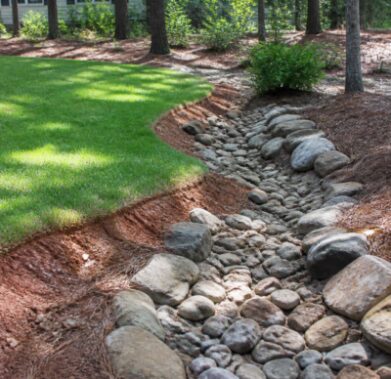
Wake County turf can cross Piedmont clay, shaded fescue, sunny Bermuda, sloping runoff, and established tree roots. A site-specific plan records grass areas, cut height, edging, gates, drainage features, and clipping management.
Lawn mowing in Raleigh usually costs $45 to $95 per visit, set by lot size, slope and how often the lawn needs a cut. Most Triangle lawns are tall fescue, so the schedule changes with the season instead of staying fixed. Call (919) 823-6150 or request a free quote and we’ll price your actual lot.
This page covers what mowing costs across Wake County, how often a fescue or Bermuda lawn really needs cutting, what height each grass wants, what the City’s water status means for your lawn, and what a visit should include so you can compare bids fairly. It’s written for Piedmont clay and humid summers, not for a generic lawn anywhere.

How much does lawn mowing cost in Raleigh?
Routine mowing, edging and blowing runs $45 to $55 per visit on lots under 5,000 square feet, $55 to $75 on lots of 5,000 to 10,000 square feet, and $75 to $95 up to half an acre. Larger properties are priced individually after the slope and access are seen.
Those ranges match our Raleigh landscaping cost guide, so this page and that one agree. Weekly accounts usually price a bit lower per visit than one-off cuts, because the crew isn’t recovering overgrown turf each time.
| Lot size | Per visit (mow, edge, blow) | Where you see it |
|---|---|---|
| Under 5,000 sq ft | $45 to $55 | Tight lots in downtown, Five Points and the inside the beltline neighborhoods |
| 5,000 to 10,000 sq ft | $55 to $75 | Most established Wake County neighborhoods |
| 10,000 sq ft to half an acre | $75 to $95 | Bigger lots in Cary, Apex, Wake Forest and Holly Springs |
| Over half an acre | $95 and up | Quoted per property |
Monthly plans have their own shape. A basic weekly mow, edge and blow plan runs about $150 to $200 a month. A standard plan that adds bed maintenance, light pruning and weed control runs about $200 to $325. Premium plans that fold in fertilization and the fall aeration and overseeding cycle run $325 to $450 or more. Our lawn care pricing guide shows how to line those up against a competing bid.
How often should a Raleigh lawn be mowed?
As often as it grows, not on a fixed calendar. NC State Extension says to mow often enough that less than one third of the leaf surface comes off in one cut. In late spring that can mean every five to seven days. In summer stress and winter, less often.
For a fescue lawn kept at 3 inches, the one third rule means mowing once it reaches about 4.5 inches. Extension describes the right rhythm as something that may amount to biweekly and weekly mowing depending on the season, which is why a flat all-year schedule overcharges you in January and under-serves you in May.
| Season | Tall fescue | Bermuda and zoysia |
|---|---|---|
| March to May | Fastest growth, weekly or even sooner | Waking up, cuts begin as growth starts |
| June to August | Slow and stressed, cut tall and a little less often | Peak growth, weekly |
| September to November | Second flush, weekly | Slowing and heading toward dormancy |
| December to February | Barely grows, occasional cuts | Dormant and brown, no mowing |
NC State notes that cool-season grasses like tall fescue grow best in spring and fall and less actively in summer, while warm-season grasses are slow to green up, grow best in summer and go dormant after the first heavy frost. Knowing which one is in your yard is the first step, and our Raleigh grass types guide helps with that.
How tall should I cut tall fescue, Bermuda and zoysia in Raleigh?
NC State’s Piedmont table lists 2.5 to 3.5 inches for tall fescue, 1 to 2 inches for Bermuda with a rotary mower, and 0.75 to 2 inches for zoysia. In peak summer heat, fescue does better at the top of its range or a touch taller.
Our summer lawn guide recommends 3.5 to 4 inches for fescue in the worst of the heat, because taller blades shade the soil, hold moisture and protect the crown of a heat stressed plant. Cutting below 3 inches in a Raleigh summer is an invitation to brown patch, the fungal disease that thrives in the Triangle’s warm, humid weather, especially when the lawn stays wet overnight.
- Tall fescue: 2.5 to 3.5 inches by the extension table, higher in summer heat.
- Bermudagrass: 1 to 2 inches with a rotary mower, and at least twice a week in season for the best results.
- Zoysia: 0.75 to 2 inches, slow growing, and demanding on blade sharpness.
The tall fescue versus warm season comparison explains how the choice of grass changes your mowing bill and your summer.
Are there water restrictions in Raleigh right now?
Not as of October 6, 2026. The City of Raleigh lifted its Stage 1 restrictions on August 3, 2026, after Falls Lake recovered to 84 percent full, and no water restriction alert was showing. Conditions can change, so check the City’s alert page before you plan irrigation.
Our Raleigh water restrictions guide records the status and the reasoning. During Stage 1, first-time violators received a warning, a second violation carried a $100 fine and a third was $500. With restrictions lifted, the City still asks residents to use water wisely, and the lake isn’t back to full capacity.
For mowing, the useful takeaway is that a taller cut cuts water need. Our guide says raising your mowing height can reduce a lawn’s water needs by 20 to 30 percent, because taller grass shades the soil and grows deeper roots. That’s the cheapest drought insurance a homeowner has, and it costs nothing but a deck setting.
Should clippings be bagged or left on the lawn?
Leave them on the lawn. NC State Extension says clippings decay in the turf and release nutrients, which may cut fertilizer needs by 20 to 30 percent. Only collect them when they’re heavy enough to shade or smother the grass underneath.
Clippings aren’t what builds thatch. Extension explains that thatch is made of roots, stems and the lower leaf portions below the mower blade, and that frequent mowing on a dry lawn with proper fertilization keeps it in check. When rain has delayed a cut and the clippings come out in clumps, we rake or bag that visit and go back to mulching the next one.
What does our lawn mowing process look like, step by step?
Each visit follows the same order, so you can check the work against the list. We walk the lawn, mow at the agreed height, trim, edge, blow off hard surfaces and take a last look. Frequency changes with the season, but the steps and the cutting height stay agreed in writing.
- Arrive and look over the lawn (first few minutes). Gates get checked, loose items cleared, and any soft or wet ground noted. The blade height was settled with you at the start, and we don’t change it without asking.
- Mow in a different line than last time (the main part of the visit). Alternating direction keeps the grass standing and keeps clay from rutting. Dry turf gets cut when the weather allows, since wet blades tear.
- Trim what the mower can’t reach (right after the mow). Fence lines, trunks, posts and the edges of beds are cut back by string trimmer.
- Edge the hard lines (same visit). Driveway, walk and bed borders get a crisp line. You pick whether bed edges are done each time or on alternate visits.
- Blow off (final task). Clippings leave the pavement and go back onto the lawn instead of washing toward the storm drain.
- Report anything we saw (before leaving). A patch of brown patch, a tilted sprinkler head or a fallen limb gets passed along, so it’s handled before it grows into a bigger problem.
Seasonal changes are agreed in advance, so you aren’t asked every month. The schedule gets approved once, then thins out in winter or shifts toward bed care and leaf cleanup when the grass stops growing.
What does a mowing visit include, and what costs extra?
A standard visit includes mowing, string-trimming, edging hard surfaces and blowing off. Bed weeding, pruning, leaf collection, fertilizing, aeration and overseeding are separate lines. A written quote should say which of those are in the price so two bids can be compared like for like.
- Included in the per-visit price: mow, trim, edge, blow.
- Priced separately: bed weeding and pruning, seasonal cleanups, leaf removal, fertilizer rounds, fall aeration and overseeding.
- Typical add-on figures from our own cost page: fall aeration and overseeding at $200 to $500 a year, and a seasonal cleanup at $250 to $700 per visit.
Leaves are the add-on most homeowners forget. Heavy oak and maple canopy can bury fescue in a few weeks, and our leaf removal service pairs with a mowing schedule so the two fit together.
Why do mowing quotes in Raleigh vary so much?
Usually the scopes differ, not the fairness. One bid covers a bare mow while another bundles trimming, edging and bed upkeep. Lot size, slope, gate access and route density in your part of the county move the number as well, so ask each company for the same written job list.
The Triangle has plenty of master planned, HOA standard communities where edges and appearance are checked, which pushes some bids to include more detail work. Rolling lots and steep side yards add labor. A flat lot in an older inside the beltline neighborhood is quick. A sloped half acre with a retaining wall and a fenced backyard is not.
When you compare quotes, check these in writing:
- How many visits per month, and what changes the count in slow months.
- Whether trimming, edging and blowing are in every visit.
- Whether bagging, leaf cleanup or extra cuts after heavy rain are charged.
- How a skipped or added visit is approved.
How do Piedmont clay and humidity change the way we mow?
Heavy clay holds water and humid air keeps blades wet, so timing matters more than it does in a dry climate. Mowing wet fescue tears the leaf and spreads disease, which is why a dry-day cut and a sharp blade count for more here than a fixed weekday.
NC State Extension says to mow when the soil and plants are dry, to reduce the danger of spreading disease and injuring the turf, and that dull blades tear the grass instead of cutting it cleanly. Torn ends wither and give disease an easy way in. Our Raleigh soil guide describes the clay as compacting under foot and equipment traffic and draining slowly, so a heavy mower on saturated ground leaves ruts. When the ground is soft we shift the visit a day or mow in a different line.
What should I do when the lawn has gotten away from me?
Don’t cut it all off at once. NC State’s recovery method is to raise the mower and remove a quarter to half of the existing growth, then lower the deck to the proper height and mow again in a day or two. Two passes, two days apart.
Taking an overgrown fescue lawn straight down removes far more than a third of the leaf. In a Raleigh summer that is a common reason a lawn thins and fills with crabgrass. If rain kept the mower off the grass for two weeks, tell the crew, because two lighter cuts are better than a scalp.
How does mowing affect brown patch on a Raleigh fescue lawn?
Quite a bit. Brown patch is a fungal disease that thrives in the Triangle’s warm, humid summers, especially when the lawn stays wet overnight. A sharp blade, a taller cut and morning watering all lower the risk. Mowing a wet lawn with a dull blade raises it.
Our summer lawn guide lists the habits that matter: water only in the early morning, avoid nitrogen in summer, mow with a sharp blade, and treat with a fungicide if it spreads. It also notes that a dull blade shreds the tips, which lose water fast and invite disease in humid Piedmont heat. If you see tan or brown rings spreading across the fescue in July, mention it to the crew at the next visit so the cutting height and schedule can be adjusted while you sort out the watering.
The Raleigh summer lawn guide walks through the full list, including irrigation tuning and holding fertilizer until fall.
What happens to a Bermuda lawn mowing schedule after the first frost?
Bermuda goes dormant and turns brown after the first frost, so mowing stops until it wakes up in spring. In season it grows fast and wants frequent, low cuts. A fescue neighbor can stay green and still need an occasional trim while your Bermuda sits quiet.
That mismatch confuses a lot of Wake County homeowners who inherited a warm-season lawn on a full-sun lot. NC State describes warm-season grasses as slow to green up in spring, strongest in summer and dormant after a heavy frost. Zoysia follows the same pattern but grows more slowly, so it needs fewer cuts than Bermuda in season. If you’re unsure which you have, check it in late fall: green lawn through December is almost certainly cool-season fescue, while a straw colored one is warm-season turf waiting for spring.
Do HOA rules in Wake County change the mowing scope?
Often, yes. Many Triangle communities are master planned with HOA appearance standards, and those covenants can set edging, height or schedule expectations. Read yours before you agree to a plan, then put any requirement into the written mowing scope so it’s clear who is responsible.
Typical items to check are minimum visit frequency, how often beds must be edged, whether clippings may be left on sidewalks, and what the association does about a lawn that gets behind. If your community sends violation notices for overgrown turf, a seasonal schedule that leans toward weekly in spring and fall is easier to defend than a fixed biweekly plan. Bring the covenant language with you when you request the quote and we’ll write the scope to match.
What does a typical mowing job look like in Raleigh?
Three typical scopes show how the numbers land. They’re illustrations built from the price ranges on our own cost pages, not records of a particular customer. Your lot will differ, so treat them as a planning guide only, and expect a written price once we’ve seen the property.
- A typical inside the beltline small lot: under 5,000 square feet of tall fescue, mowed at 3 inches, trimmed and edged, weekly in spring and fall and every ten to fourteen days in the summer slowdown. Priced at $45 to $55 a visit.
- A typical established suburban lot: 5,000 to 10,000 square feet with a fenced backyard and a few beds to edge, weekly through the growing flush. Priced at $55 to $75 a visit.
- A typical larger Cary or Apex lot: 10,000 square feet to half an acre with a slope and a side gate that limits the mower. More trimming time per visit, at $75 to $95 a visit, with the quote written after the property has been seen.
Which Raleigh neighborhoods and nearby towns do we mow?
We mow in Raleigh and across surrounding Wake County, including Cary, Apex, Garner, Wake Forest and Holly Springs. Tell us your neighborhood in the quote request, and we’ll confirm that your address is on our route before we send a price.
How do I get a mowing quote for my property?
Call (919) 823-6150 or use the free quote form and tell us your address area, rough lot size, grass type if you know it, and how often you’d like service. We’ll come back with a written scope and a price, with no pressure and no obligation.
To make the quote accurate, have these ready: the size of the turf, any slopes or steps, gate widths, pets, and whether you want trimming and edging every visit. If you’re also planning fall seeding, leaf work or an aeration plan, say so and we’ll write the quote so the services line up with the Piedmont calendar and with any watering rules in effect.
Ready now? Get your free Raleigh mowing quote or call (919) 823-6150.
How much does grass cutting cost in Raleigh?
Grass cutting in Raleigh runs $45 to $55 per visit on lots under 5,000 square feet, $55 to $75 on lots of 5,000 to 10,000 square feet, and $75 to $95 up to half an acre. Larger properties are priced individually after slope and access are seen. These ranges match our Raleigh cost page.
Weekly accounts usually price a little lower per visit than one-off cuts. The landscaping cost page has the full table.
When does grass cutting start in Raleigh each year?
Tall fescue grows fastest from March to May, so cutting picks up in March and runs weekly or sooner. Bermuda and zoysia wake up later, and cuts begin once growth starts. Both grasses go quiet in winter, when fescue needs only occasional cuts and warm-season lawns need none.
Knowing which grass you have sets the calendar. The Raleigh grass types guide helps you tell them apart.
How short should grass be cut in Raleigh?
NC State Extension’s Piedmont table lists 2.5 to 3.5 inches for tall fescue, 1 to 2 inches for bermuda with a rotary mower, and 0.75 to 2 inches for zoysia. Never remove more than one third of the blade in a single cut, and keep fescue toward the top of its range in summer heat.
A taller summer cut also lowers water demand. See the Raleigh summer lawn care guide for the reasoning.
What should a grass cutting quote in Raleigh include?
A standard visit covers mowing, string-trimming, edging hard surfaces and blowing off. Bed weeding, pruning, leaf collection, fertilizing, aeration and overseeding are separate lines. A written quote should say which of those are in the price, so two bids can be compared like for like.
Leaves are the extra homeowners forget most. The leaf removal page covers how it pairs with a mowing schedule, and the quote form gets your lot priced.
How is a documented yard plan assembled for Lawn Mowing?
Before approving a Raleigh recurring mowing quote, give the provider dimensions, current observations, access details, objectives, and questions. The returned document must distinguish included work, owner duties, contingencies, and completion review.
What’s Included
- On-site walkthrough with the lead crew member
- Written estimate before any work begins
- Service window confirmed in writing
- Final walkthrough and quality check